
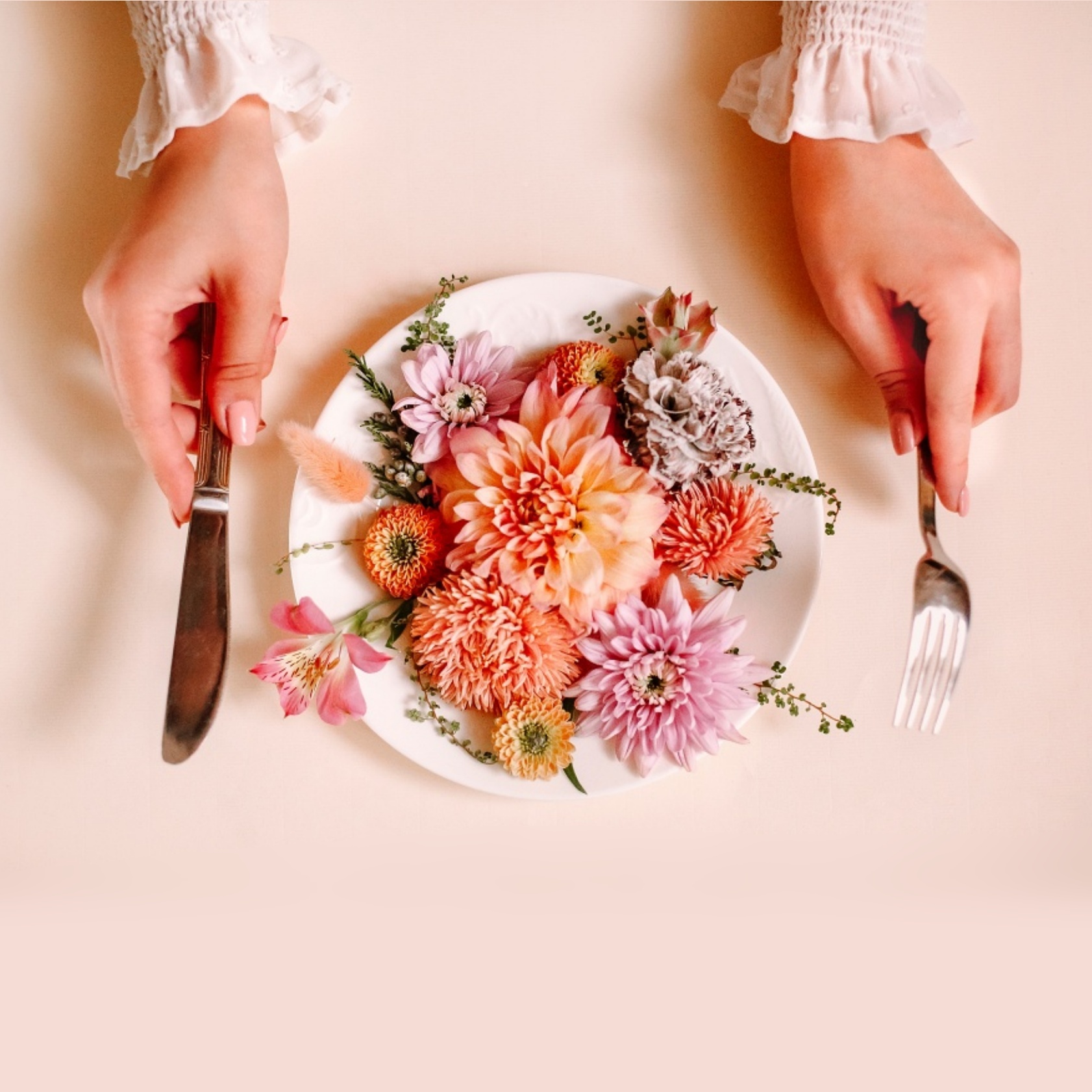
Prologue: A Quiet Prayer, Held on the Tongue
To “Eat Flowers” — A Tender, Ancient Gesture
To eat flowers.
Many people feel a small surprise—and perhaps a mysterious hesitation—when they hear the phrase.
Yet across the world, for a long time, women have carried this gesture quietly among themselves—
something natural, intimate, and strangely deep.
A flower is life in its most delicate form.
A single bud reaches for light, receives wind, is washed by rain—
then burns for a brief moment into bloom.
To “eat” that moment is to welcome the flow of life into the body itself.
Ancient women believed that by taking flowers into the mouth, they could become closer to nature—
and even hold the breath of the gods within themselves.
Eating flowers was not merely beauty, nor luxury.
It was a prayer—
and a ritual through which a woman remembered her own goddess nature,
quietly, beautifully, without spectacle.
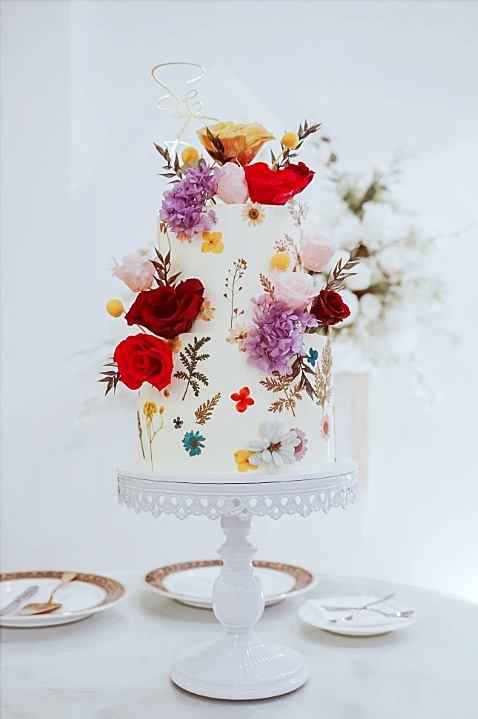
I. Ancient Rome — Nectar Feasts and the Festival of Flora
In ancient Rome, spring was celebrated through festivals honoring Flora, goddess of flowers.
Floralia—an exuberant moment when the earth woke from winter sleep.
The city was dressed in blossoms; women wore wreaths,
sang and danced with wine and honeyed drinks where petals floated on the surface.※1
In Roman imagination, renewal arrived through divine feminine forces.
To eat flowers and wear fragrance was not decoration—it was a ritual of rebirth.
Taste nectar and life returns to the bloodstream;
taste rose and love and sensual vitality awaken again.
Women understood these symbols not by analysis, but by instinct.
Roses were offered to Venus, too,
and “eating flowers” became a way of inscribing love, abundance, and joy into the body.
Old lines suggest that the woman who takes rose to her lips
learns love without having to speak it.
This was not about taking something from outside,
but about calling sacred love back from within.
Flowers were bridges between gods and humans.
To eat a flower was to mix divine life with breath and blood—
a sensual, spiritual experience, as if drinking the exhale of the gods.
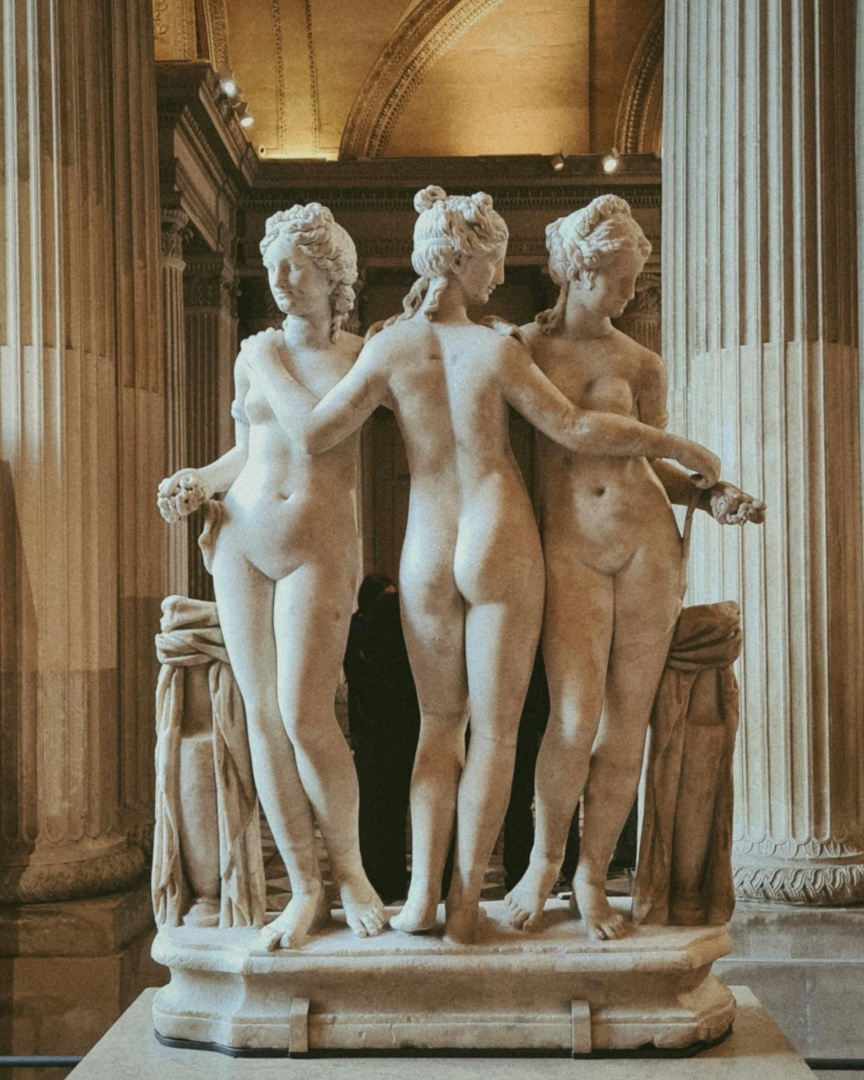
II. Greek Myth — Transformation and the Flowers of the Goddesses
Some of the oldest stories of flowers and women live inside Greek myth.
Persephone eats pomegranate seeds in the underworld—
and from that act, the cycle of seasons is born.
Spring returning to the earth; winter descending into shadow—
at the center stands a goddess who took fruit (and by extension, the floral world) into her mouth.
Persephone’s eating is not punishment or fall.
It is acceptance of transformation—
the moment life embraces death, and returns again to life.
To eat flowers is to welcome change without fear,
and allow the rhythm of death and rebirth to live inside the body.
Aphrodite, too, is a goddess of roses.
Legends tell of rose petals infused into oil, used to cleanse the body before rites of love.
Fragrance dissolves the border between sensuality and spirit.
To scent, to taste—both were gestures of standing between the human and the divine.
In Greece, floral honey drinks and herb-infused wines were offerings for dialogue with the gods.
Through them, women “sanctified the senses.”
Eating flowers meant honoring the body as a temple—
and tuning the soul toward harmony with the cosmos.
III. Heian Japan — Flowers as Silent Language
Far to the east, in Japan too, a quiet spiritual exchange lived between flowers and women.
In the Heian period, noblewomen wore the seasons in layers of color,
burned incense, composed poetry—
and at times received flowers as part of food and drink.
Sakura-yu (cherry blossom tea) in spring, chrysanthemum sake in autumn—
seasonal rituals to let the power of the season enter the body.
During the Double Ninth Festival, petals floated in sake for purification and longevity.※2
Flowers and herbs also appeared in baths and household remedies,
practices thought to let heaven and earth circulate through the body.
“Kiku no kisewata”—wiping skin with cotton that gathered chrysanthemum dew—
feels like a goddess ritual of beauty.
Dew and petals were ways to carry “the force of the sky” onto a woman’s body.
Flowers were also emotions—
love, solitude, prayer, silence.
To attach a flower to a letter was to entrust what words could not hold.
To take a flower into the mouth was to take that feeling inward—
to cultivate love inside oneself.
Eating flowers is a woman’s silent prayer: speaking without speaking.
IV. The French Court — Sweet Petals, Temptation, and Women’s Freedom
Versailles in the eighteenth century.
At dinners scented with rose and violet,
Marie Antoinette was sometimes remembered as a queen who “ate flowers.”
Candied violets—candied violets.
Rose confiture, orange blossom syrup.
These were small spells: condensed beauty, love, and women’s quiet knowledge.
Eating flowers was not merely to display beauty,
but to awaken inner sacredness through fragrance.
Court women knew this without having to name it.
In eighteenth-century Europe, women who handled herbs and flowers were often seen as “dangerous.”
To decoct plants, blend scents, and hold herbal knowledge—
was eventually labeled as witchcraft.
But in truth, scent and flower-food were women’s ways of understanding emotion and body.
That knowledge could become a threat to power.
Flowers both blessed and constrained women.
Within that double edge, women kept seeking freedom.
This act could be a quiet resistance—
a way of reclaiming real feminine power beyond what society prescribed.
V. The Power of Flowers — A Goddess’s Recipes for Body and Soul
Ancient wisdom continues through plants.
Flowers hold an invisible spiritual resonance.
█ Rose — Love and Self-Acceptance
Rose opens the heart and softly wraps wounded self-love.
In ancient Egypt, Cleopatra bathed in rosewater—
a rite of wearing “the skin of the goddess of love.”
To taste rose is also to practice loving oneself.
█ Lavender — Cleansing and Gentle Rest
Lavender eases sorrow and invites quiet sleep.
Float petals in tea, and deep memories may soften and dissolve.
In old stories, lavender is called a goddess herb that keeps nightmares away.
█ Calendula — A Sun-Holding Flower
Orange marigold carries the symbol of light.
Scatter petals into soup when you feel low,
and warmth returns, as if sunlight entered the chest.
█ Jasmine — Sensuality and Creative Energy
*For edible use, typically Arabian jasmine varieties (Jasminum sambac).
Night-blooming jasmine is a moon flower.
Its scent stirs emotion and calls the rhythm of life back.
“Breathe jasmine, and the soul begins to dance,” old sayings suggest.
█ Violet — Silence and Memory
Violet is a flower that does not shout.
Its small purple touches what is stored in the chest—quietly.
Long eaten as syrup or candied petals,
violet has been called a flower of silence—softly easing unspoken love and sorrow.
To eat flowers is to build a bridge between body and soul—
to remember the joy of being alive through all the senses.
VI. The Return of “Eating Flowers” in Modern Life
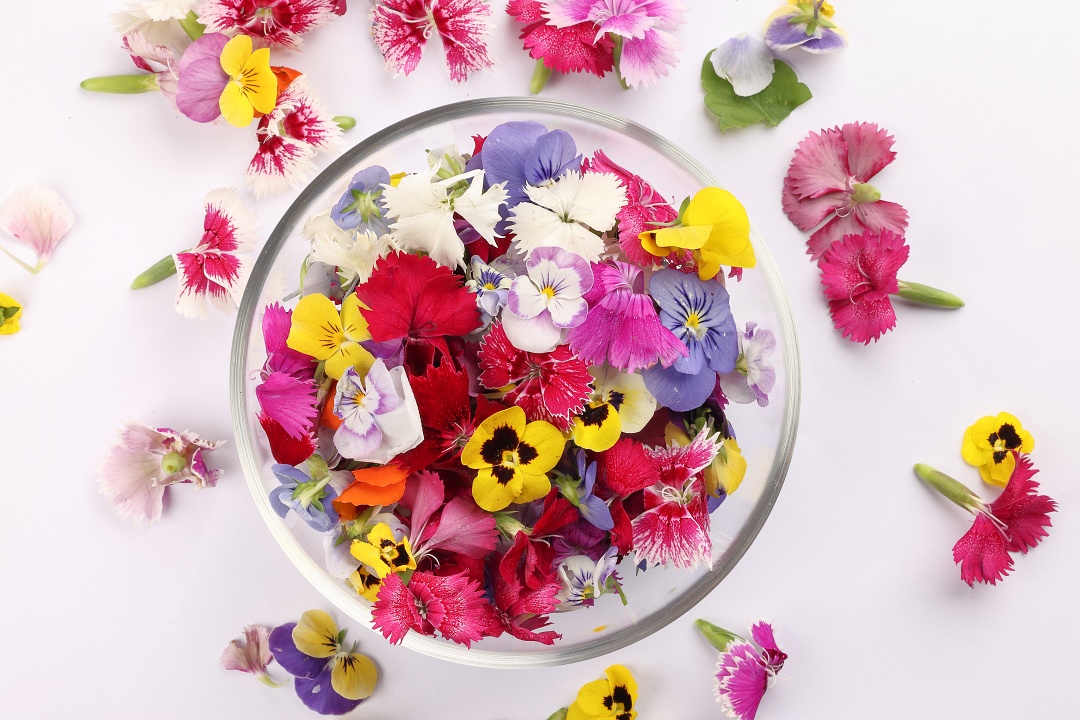
Edible flowers, herbal tea, flower essences—
in quiet ways, we are returning to the sensation of “eating flowers.”
*When using flowers for food, please confirm the type, cultivation method, and safety.
Holding a cup with cherry blossoms floating on the surface;
sleeping in lavender; tasting rose jelly—
each act awakens the ancient memory of goddesses.
To eat flowers is to begin speaking with nature again.
To recover the sense of cycles that busy life makes us forget.
The color of flowers is the color of the heart.
Their scent is a door to memory.
Their taste is an original flavor the soul keeps trying to remember.
When a small flower touches the lips,
it becomes an old, gentle bridge—
between nature and human, woman and sacredness.
Epilogue: Living Like a Flower
A flower changes the world by simply blooming.
It releases fragrance, holds color, sways in wind—
and speaks nothing, yet carries complete presence.
A woman, too, is originally that kind of being.
Without adding anything, without being approved by anyone,
she is already a flower.
Eating flowers is a ritual of remembering—
leaving the search for the sacred outside,
and returning to the sacred garden within.
When you eat flowers,
it may be the moment the goddess inside you smiles.
A flower quietly reminds you of who you are.
—To eat flowers.
An old and new “memory of the goddess,”
binding beauty and life, prayer and love into one.
Our salon, too,
wishes to remain a place that quietly stays close to such memories.
- Floralia … A spring festival in ancient Rome honoring Flora, goddess of flowers.
- Double Ninth Festival … A seasonal festival on Sept 9; traditions include chrysanthemum sake and purification rituals.
(Supervision: Salon de Alpha — Natural Wellness Advisor)